Home wound care service aims to maintain the wound's healing conditions under regular monitoring and to reduce the risk of infection. The initial assessment visit usually lasts between 30–60 minutes; the total care duration can be expressed in weeks for simple surgical incisions and in months for chronic wounds. The duration and scope vary according to the type and depth of the wound, the patient's accompanying illnesses, and the required frequency of visits; a clear plan is created individually after physician evaluation. In this guide, we explain how the process progresses at home, the responsibilities that the family can safely undertake, and at which point the medical practice remains under the authority of the nurse and physician. For the definition and general framework of wound care, you can review the scope of our home private nursing service.
Contents
What needs to be prepared before starting care
The productivity of the first visit of home wound care largely depends on information gathered in advance. The nurse and physician build the plan by looking not only at the appearance of the wound but at the patient as a whole. As emphasized on the wound care information page of the Republic of Turkey Ministry of Health Aydın Provincial Health Directorate, wound care requires a multidimensional approach such as evaluation of pressure points, pain control, nutritional status, moisture and incontinence management, and increasing mobility.
Information that can be prepared before the first visit:
- Diagnoses and chronic illnesses: conditions such as diabetes, peripheral vascular disease, heart failure, kidney disease.
- Current medication list: the evaluation is accelerated when pharmacy boxes or prescription printouts are ready.
- Recent medical procedures: surgery date, discharge summary, dressing or intervention notes made in the hospital.
- Tests: if available, recent blood tests, culture results, imaging reports.
- History of the wound: when it started, how it formed, what care was previously applied, whether there was any change in discharge and odor.
- Allergy information: known reactions caused by medication, tape, or material.
The preparation list for the home environment can be kept quite simple:
- Sufficient light in the room where care will be done and a comfortable working height; open access to the bedside.
- Regular ventilation of the room, keeping it away from cigarette smoke.
- A calm area with a hand-washing facility nearby.
- Storing the materials left by the nurse in a dry, clean, and closed cabinet.
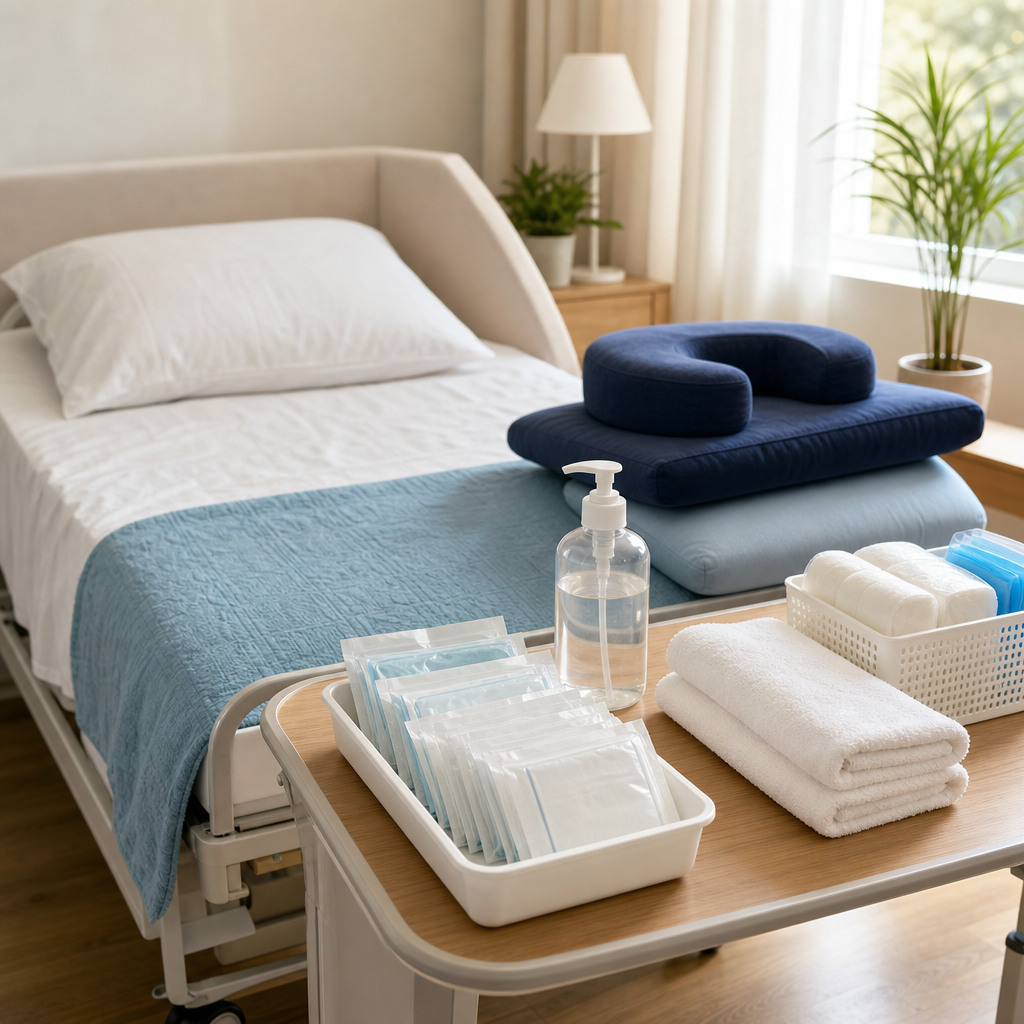
- Pillow and support materials that will facilitate position change in a bedridden patient.
- Keeping pets from entering the room during care.
None of these preparations involve direct intervention on the wound. The goal is not to undertake the medical procedure, but to ensure the procedure can be performed under appropriate conditions.
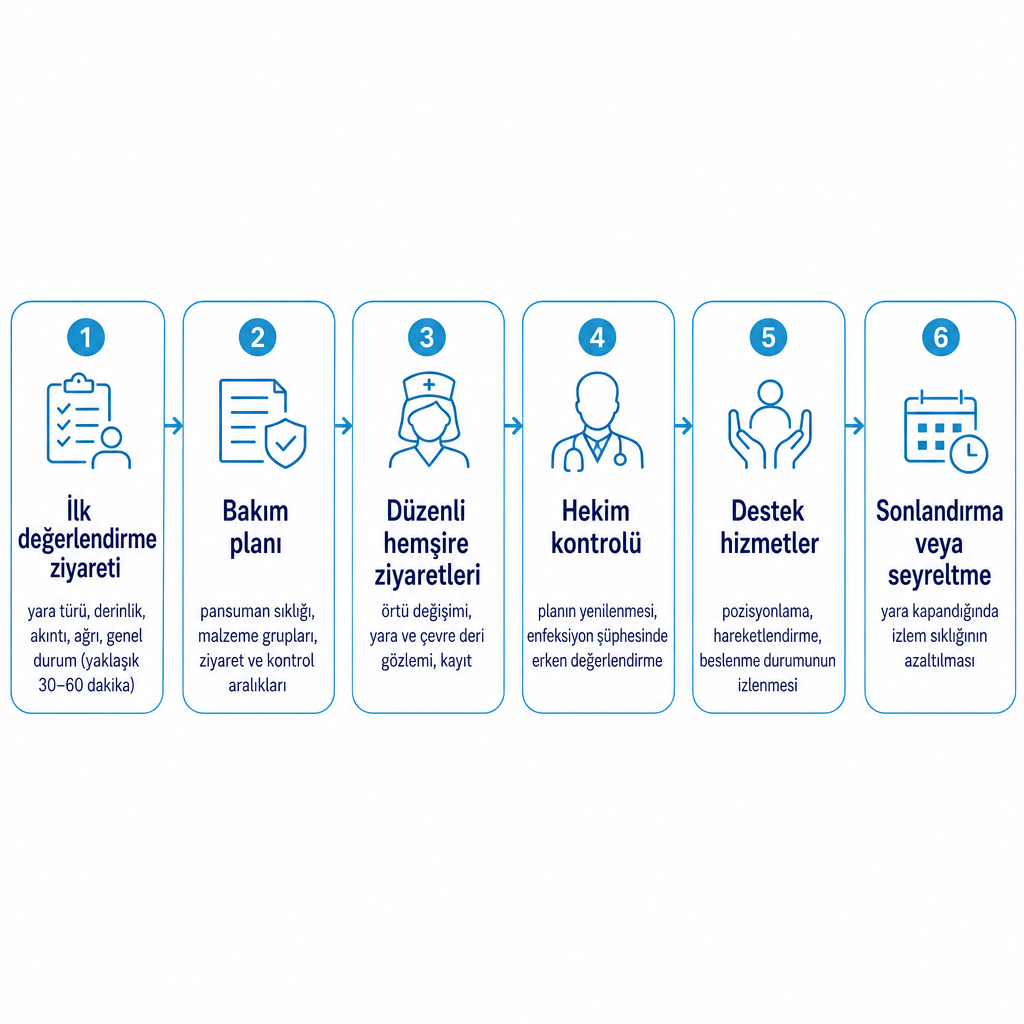
Step-by-step operation of home wound care service
The following sequence shows the general flow of wound monitoring carried out at home. The schedule and content repeated in each patient differ according to the physician's evaluation.
- Initial assessment visit. The physician and/or nurse examines the type of wound (surgical incision, traumatic wound, diabetic foot ulcer, pressure ulcer), its location, depth, the condition of the surrounding tissue, discharge and odor characteristics, the presence of dead tissue, pain level, and possible signs of infection. In the same visit, vital signs, nutritional status, and mobility capacity are evaluated. This meeting lasts approximately 30–60 minutes in most patients.
- Creating the care plan. After the evaluation, the frequency of dressing, the general material groups to be used, the nurse visit intervals, and physician check dates are determined. The Ministry text states that topics such as keeping the wound in an ideal moist environment, exudate and infection control, and removal of dead tissue when necessary are part of the plan established by the physician; these decisions are not decisions that can be made spontaneously at home.
- Regular nurse visits. At each visit, the existing dressing is removed in a controlled manner, the wound bed and the skin around it are observed, measurement and observation notes are recorded, and then a new dressing is applied according to the plan. In the monitoring we carry out within the scope of home private nursing, vital signs, pain level, and discharge character are also noted at each visit.
- Physician check and renewal of the plan. Shrinkage of the wound, reduction in discharge, or an unexpected change requires review of the plan. In situations such as suspicion of infection, fever, sudden increase in pain, or color change in the wound, home private medicine evaluation is prioritized; the physician decides whether advanced tests or intervention in hospital conditions is needed.
- Integration with support services. In patients at risk of pressure ulcers, positioning and mobilization plans become important; programs aimed at increasing mobility capacity can be planned within the scope of our home physiotherapy service. In patients thought to have nutritional insufficiency, monitoring protein and energy intake is evaluated by the physician in terms of preserving healing conditions.
- Termination or reduction of care. When the wound closes or the monitoring frequency reaches a level that can be reduced, the plan is rearranged. In areas at risk of recurrence, observation recommendations are continued to preserve skin integrity.
The family's safe responsibilities in infection prevention
A portion of the work that reduces the risk of infection is not medical practice; it relates to daily order and can be safely maintained by the family.
Hand hygiene and contact order. Washing hands with soap and water for at least 20 seconds before and after approaching the patient, and not touching the wound area with bare hands or an unclean object during care, is the basic rule. Pressing on the dressing, lifting its edge to look, and changing a tape thought to be dirty on one's own go outside this rule.
Pressure and position control. In a bedridden patient, bony prominences such as heels, sacrum, hip bones, elbows, and behind the ears are regularly observed. Following the position change interval given by the nurse or physiotherapist, reducing friction and shear movement, and keeping the sheet taut and dry are practical steps that reduce the risk of pressure ulcers. The Ministry text also counts increasing activity and evaluating pressure points as part of wound management.
Moisture and incontinence management. When the skin remains moist for a long time, its integrity is more easily compromised. Cleaning and drying the area without delay after contact with urine or stool, and changing underwear that gets wet due to sweat and leakage, are areas where the family can directly contribute.
Nutrition and fluid intake. Adequate protein and energy intake is part of the conditions required for wound healing. Noting the meal amount, fluid taken, and weight change makes it easier for the physician to review the plan. Diet adjustment is made with physician and dietitian evaluation.
Observational monitoring. The family's most valuable contribution is noticing change early. Spreading of redness, increase in temperature to the touch, change in the amount or color of the discharge, bad odor, marked increase in pain, fever, chills, weakness, and loss of appetite are observations that should be reported to the nurse or physician. Since these findings can vary from person to person, interpretation and decision belong to the physician.
What should not be done. Applying harsh chemicals such as alcohol, cologne, or hydrogen peroxide to the wound bed, trying herbal mixtures or home-prepared solutions, attempting to cut dead tissue or remove the scab on one's own, and performing off-plan dressings with leftover materials can disrupt healing conditions and increase the risk of infection.
Common mistakes and what to do
Opening the dressing without consulting. Removing the dressing out of curiosity or worry that "it looks dirty" disrupts the moisture balance of the wound and increases contact with the external environment. The correct step is to report the observation to the nurse by describing it and to ask whether the visit time will be brought forward.
Harsh antiseptic or home-made application. Solution choice is a medical decision that directly affects tissue viability. If burning, color change, or increased discharge is noticed in the wound, the application is not continued and the situation is conveyed to the physician.
Neglect of pressure points. The patient staying in the same position for hours in front of the television or in a wheelchair can be a trigger for a process that begins with redness on the skin. Using a reminder throughout the day for position change makes the observation regular. If the redness does not fade when pressed, this finding should be reported without delay.
Overlooking nutrition and fluid intake. Insufficient intake lasting for days in a patient with decreased appetite weakens the conditions required for healing. Recording the meals taken with short notes enables the physician to see the problem early.
Bandage or stocking being too tight. When coldness, bruising, numbness, or increased pain is noticed in the fingers, do not try to loosen the application; inform the nurse. Pressure decisions affecting circulation require professional evaluation.
Waiting for symptoms to "pass." Fever, spreading redness, sudden increase in pain, or change in consciousness are observations that should be reported the same day rather than waiting for the scheduled visit. In some of these situations, advanced tests or evaluation in hospital conditions may be needed; the physician makes the decision.
Decision point: how far the family goes, from where the team takes over
The area the family and patient can safely undertake is clear: preparing the environment, hand hygiene, position change and observation of pressure points, moisture and incontinence control, monitoring nutrition and fluid intake, recording changes in pain and appetite, storing materials dry and closed, and following the appointment and check schedule. These tasks carry the continuity of care and are decisive in preserving healing conditions.
Every step beyond this is a medical procedure and must be performed by a licensed health professional: evaluation and staging of the wound, dressing and solution selection, dressing application, removal of dead tissue, discharge and infection management, culture or test decision, medication decisions, bandage systems affecting circulation, and determining the necessity of hospital referral. In Turkey, these medical services provided at home are carried out under the responsibility of physicians and nurses within home health institutions licensed by the Ministry of Health.
In our Üsküdar-based team, physicians, nurses, and physiotherapists work together; therefore, wound monitoring, mobilization, and general medical follow-up can progress within the same plan. We explain in more detail how monitoring is structured in the post-surgical period in our article on the post-surgery home care process.
Which service is suitable varies according to the type of wound and the general condition of the patient. If you convey to us the duration of the wound, its location, accompanying illnesses, and the patient's mobility capacity, we can prepare an individualized monitoring framework after physician evaluation.
Frequently Asked Questions
In what situations does home wound care service come up?
The most common reasons for application are; post-surgical incision care and dressing needs, pressure ulcer risk or existing pressure ulcers in bedridden patients, foot ulcers due to diabetes and vascular disease, and advanced age and mobility restriction situations where frequent trips to the hospital are difficult. The suitability decision is made by physician evaluation.
How long is professional monitoring required for a post-surgical wound?
In simple surgical incisions, monitoring can mostly be completed within weeks. In chronic wounds such as diabetic foot ulcers and advanced-stage pressure ulcers, the process can extend to months. The exact duration varies according to the course of the wound, accompanying illnesses, and nutritional status; the plan is reviewed by the physician at regular intervals.
What precautions can be taken before a pressure ulcer forms?
In the Ministry information, regular evaluation of pressure points, moisture and incontinence control, monitoring of nutritional status, and increasing activity and mobility are highlighted. In practice, following the position change interval, keeping the sheet taut and dry, reducing friction, and daily observation of bony prominences take place within this framework.
What should I do when I see a sign of infection?
Observations such as spreading of redness, increase in temperature, change in the amount or color of the discharge, bad odor, increased pain, fever, and weakness should be reported to the nurse or physician the same day. The dressing is not opened on its own, and no substance is applied to the wound. Since symptoms can vary from person to person, the evaluation and treatment decision belongs to the physician.
What information is useful to prepare before the first visit?
Current diagnosis list, medications used, discharge summary or surgery note, recent test and culture results if available, when and how the wound formed, and a summary of the care previously applied. Known drug and tape allergies also facilitate the evaluation.
How are wound monitoring and home physiotherapy planned together?
Since mobility restriction increases the risk of pressure ulcers, nurse monitoring and the physiotherapy plan are often structured within the same framework. The physiotherapist carries out the positioning and mobilization program, and the nurse carries out wound monitoring; the scope and frequency of the two areas are determined according to the physician's evaluation. For details about the team structure, you can look at our article explaining the duties and responsibilities of the home care nurse.